

Veteran Athlete Wants to Celebrate Kenyan Football’s History

Veteran Athlete Wants Football Anniversary Celebrated
April 30, 2026
Chitalu’s CECAFA Cup Legacy
May 3, 2026Veteran Athlete Wants to Celebrate Kenyan Football’s History
By Satish Sekar © Satish Sekar (May 1st 2026)
Making Football History
Today is the centenary of the first edition of Africa’s oldest regional football tournament. Tanganikya and Zanzibar declined to attend – they joined the tournament just over 20 years later. That left Kenya and Uganda to battle it out to become the first country to win the Gossage Cup, named after a British luxury soap manufacturing company (William Gossage & Sons)[1].
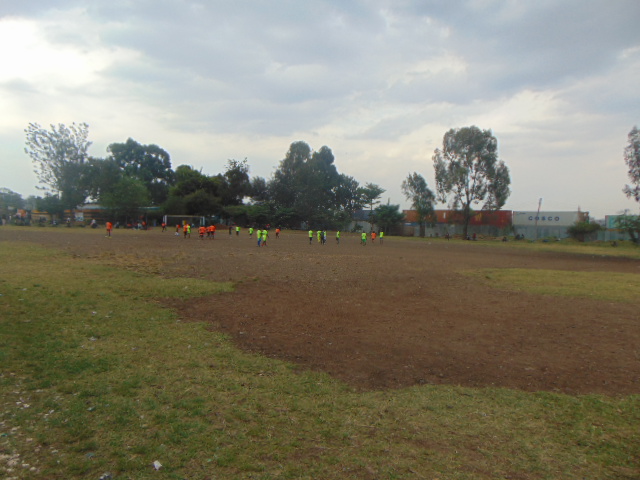
The first edition of the Gossage Cup ended in a 1-1 draw at Nairobi’s Landi Mawe Grounds[2]. That meant that the teams had to play again two days later – Kenya won 2-1. The Gossage Cup was born. It lasted until 1966. After a brief interlude from 1967-71, the CECAFA Cup took over in 1973. It is the oldest regional international football tournament in Africa’s history. Football in the region lost its pride of sporting place to athletics in the 1960s, but the Veteran Athletes Association (VAA) want to see football rise again.
The VAA Plan
The Organizing Secretary of the VAA, Simon Biwott, wants to see football’s history celebrated again. “Kenyans must get to know that football has been in Kenya for quite some time,” Biwott said, “and it’s going to revive what has already been forgotten here in Kenya and it might inspire also the current generation of footballers to get to know who were behind the success of Gossage Cup in Kenya at that time.”
Biwott thinks the centenary of the Gossage Cup is a very important anniversary for Kenyan sport. “It is a very important anniversary that should be taken seriously in the sportsworld, because first of all, it highlights that in Africa, Kenya has also participated in one of the oldest football events, maybe known in Africa.”
It is Africa’s oldest international football tournament.
“Yes, and that’s why I see it as a very important anniversary, whereby Kenya should lead by example, and of course, together with Uganda – the two teams that played at that time.”
It’s too late to celebrate the actual anniversary, which is today, but Biwott wants the anniversary to be properly celebrated later this year. “First of all, is to trace back to see if this football was played last in 1966,” Biwott said. “Do we still have the legends that played this cup during that time?” Biwott asked – we do.
“Now, it’s high time to bring them on board and recognise and appreciate them,” he said. “Secondly, although we have the shortest time possible, but I think it would be possible, or it would be good if we can organise one team from Uganda to play against another team from here in Kenya as a way of celebrating this anniversary, and, of course, Kenya being known in the athletics world as among the superpowers when it comes to athletics, I believe also that the legendary athletes should join and attend in celebrating this event, because by remembering the football legends, it will also trigger some appreciation from the athletics organising body to also appreciate the contributions and achievements of the veteran athletes that have also played a role in lifting Kenya to the high standards in terms of athletics.”
[1] William Gossage & Sons became a subsidiary of Lever Brothers (Unilever) in 1911. That same year Huilieries du Congo Belge (HCB), later known as Huilever became a subsidiary of Lever Brothers, later Unilever. William Hesketh Lever, later Viscount Leverhulme talked about increased productivity through kind treatment of workers, which he did in England, but facing resistance in the Belgian Congo it secured vast tracts of land for plantations to deliver palm oils – it used forced labour. In modern times Plantations et Huileries du Congo (PHC) was not averse to using violence against local Congolese communities.
Meanwhile Gossage invested in East African football and retains a positive reputation, especially in Kenya and Uganda.
[2] Like many historic grounds it has been poorly maintained – football is still played on it, but the state of the pitch is woeful and it hardly warrants the name of stadium. For a ground that played such an important part in East African football, it is shameful that there is not so much as a plaque, let alone statue to commemorate such an important event in Kenyan sporting history.

