

Chitalu’s CECAFA Cup Legacy

Veteran Athlete Wants to Celebrate Kenyan Football’s History
May 1, 2026The Gossage Cup’s Legacy
May 3, 2026Chitalu’s CECAFA Cup Legacy

By Satish Sekar © Satish Sekar (May 3rd 2026)
Africa’s First International Football Tournament
Today is the centenary of Kenya’s 2-1 triumph over Uganda in the first tournament in African international football, the Gossage Cup at Nairobi’s Landi Mawe Grounds. Named after British luxury soap manufacturers, William Gossage & Sons, who invested in East African football despite being a subsidiary of the controversial Lever Brothers (now known as Unilever) the Gossage Cup lasted 40 years.
There were 38 editions of the Gossage Cup – it wasn’t held in four years, 1927, 1933, 1934 and 1950. Uganda was easily the most successful, having won it 21 times, including the worst thrashing in the tournament’s history – 1931 when they beat Kenya 13-1. 1959 made history as Kenya and Uganda shared the trophy – the only time that has happened.
Tanganikya and Zanzibar joined in 1947 – they had declined invitations to the inaugural tournament. Tanganikya, later Tanzania, when it unified with Zanzibar politically if not in a football sense, won the Gossage Cup four times, 1949, 1951, 1964 and 1965, the latter being the penultimate edition of the Gossage Cup. The final edition took place in Zanzibar in 1966 and ended with Kenya as champions and Uganda as runners-up just as the first tournament had ended.
But as the Gossage Cup was drawing to a close, replaced briefly by the East and Central African Senior Challenge Cup (1967-71), a future star was emerging in another country. Born in Luyansha in Zambia’s Copper Belt in November 1947, Godfrey Chitalu wanted to play football from a young age – he was encouraged by his elder Fanny Chanda, eventually heading to Kitwe. He played for Kitwe United from 1964-1970, setting a new transfer record as a result of an unorthodox move to Kabwe Warriors.
Chitalu was still a teenager when the Gossage Cup was replaced. In 1968 Chitalu broke Pelé’s record for a single season, which had lasted a decade. Chitalu broke his own record for a single season and calendar year four years later – 107 and 116, which easily surpasses Lionel Messi’s 91 forty years later.
In 1973 the first CECAFA Cup took place – it continues the history began by the Gossage Cup. Zambia and Somalia joined the participants. The following year Zambia reached the final of AFCON and Chitalu began his international exile, which lasted until 1977. In 1978 his second and last AFCON chance was destroyed by a hamstring injury – he took it out on CECAFA Cup opponents a few months later. By then Malawi had also joined CECAFA and played in the CECAFA Cup at that time – both Malawi and Zambia are now members of COSAFA (the Council Of Southern African Football Associations).
Chitalu’s Tournament
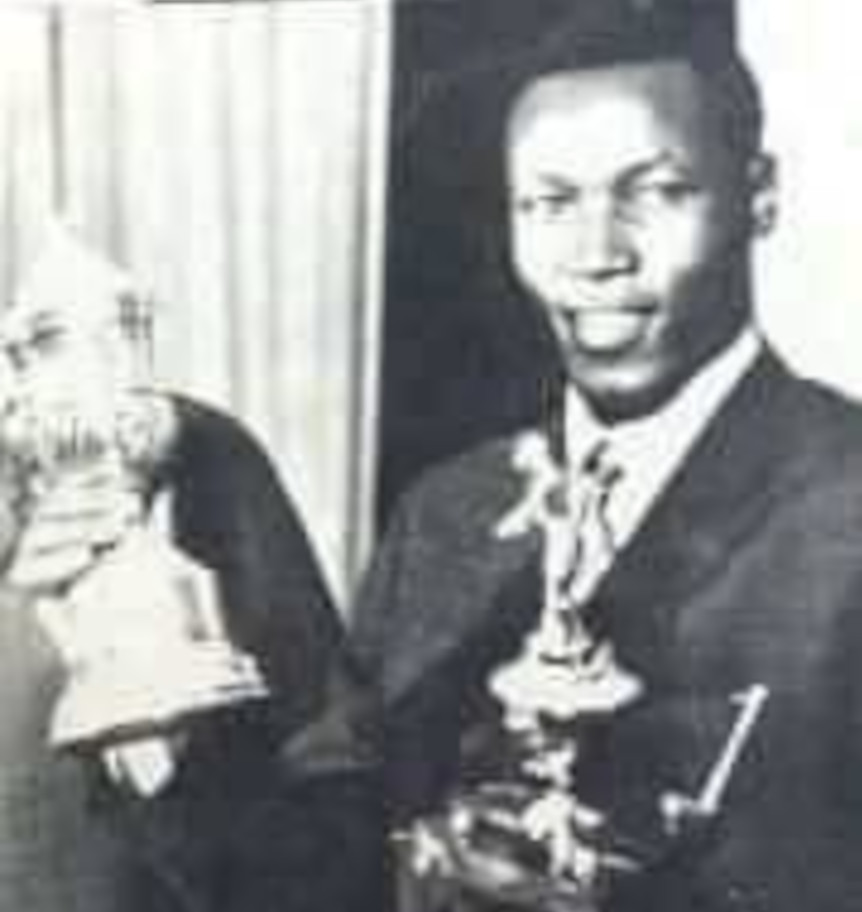
Godfrey Chitalu was just 45 when he lost his life in the Gabon Plane Crash. It was one of the worst tragedies to hit football – there were no survivors of the disaster of April 1993. Zambia’s Golden Team was lost in the crash, but it also cost Zambia the future of its coaching and two of greatest legends, Godfrey Chitalu and Alex Chola.
Chitalu is the top scorer in Zambian football – Chola shone too, but Zambia’s greatest never got the opportunity to shine on Africa’s greatest stage. On début in the Africa Cup of Nations in 1974 the great talent that was Chitalu did not fit coach Ante Buselić’s plans – the late Simon Kaushi was a top-class player – no doubt about it, but Chitalu was an exceptional multi-generational talent. His record, both before and after his international wilderness years establishes that he was a player so talented that a way to incorporate him into the team needed to be found. And in 1978 Chitalu emphasised his abilities.
The Chairman of Kenyan Football’s Legends Association, Josphat Murila explained the 1978 campaign by Kenya, which was won by Malawi. But the star of the show was the late Godfrey Chitalu – Zambia destroyed Kenya 9-0 with Chitalu netting a hat-trick.
The Zambian star who still holds the record for the highest number of goals scored by an African in international football, 79, avenged his Africa Cup of Nations (AFCON) disappointment in Malawi’s CECAFA Cup that year. Chitalu was unable to set the AFCON record straight due to a hamstring injury in Ghana in 1978, but he avenged that disappointment and then some in Malawi.
Chitalu set a still standing tournament record – 11 goals in just five matches. That included all four in the 4-0 semi-final drubbing of Uganda, the beaten finalists in the 1978 AFCON just a few months earlier. That match followed the thrashing of Kenya.
Paul Ssali was Uganda’s goalkeeper in both tournaments. He holds Chitalu in the highest esteem. “That man, Godfrey Chitalu, was, to me, the deadliest striker I have ever faced in my football days,” Ssali told me exclusively. “One incident I will never forget was in 1978 during CECAFA tournament in Malawi. He won the game against Uganda single-handed when he scored 4 goals in my goal and the game ended 4-0 in favour of Zambia.”
Chitalu had scored the winner in Zambia’ opening match of the CECAFA Cup – a 2-1 win over Uganda on November 5th 1978. Then, he scored a brace in the 4-0 thrashing of Somalia. Kenya was then subjected to the third most severe thrashing in their history in the final group match, a 9-0 drubbing. Chitalu scored a hat-trick in that match.
Murila insists he did not play in that match, although he doesn’t claim that his absence was the reason for the thrashing. “We followed the plan in the first two matches,” he said. Murila insists that he doesn’t know what went wrong – nobody could explain it.
He says that he played against Chitalu in 1979 and again in 1980 as Chitalu’s storied career came to its end. Chitalu scored all four in the semi-final against Uganda and one in the 3-2 loss in the final to Malawi. His 11 goals tally is still the tournament record.
He didn’t score against Kenya the following year but got a hat-trick against them in a 5-0 thrashing the following year as Chitalu’s international career was drawing to a close. He ended his international career against Kenya in the Jamhuri Cup in Kenya in December 1980 with a goal in each match – his 78th and 79th.
His African record has lasted over 45 years and counting – Egypt’s Mohamed Salah is closing in with his current national team coach Hossam Hassan ahead of him on 68.

