

The Second Betrayal (Part Five)

The Second Betrayal (Part Four)
August 15, 2026
The Second Betrayal (Part Six)
August 17, 2026The Second Betrayal (Part Five)
CREATOR: gd-jpeg v1.0 (using IJG JPEG v62), quality = 82
By Satish Sekar © Satish Sekar (August 16th 2026)
Triumphant
Egypt’s status had changed significantly over the decade since the revolution of 1919[1]. It was now a Protectorate of Britain and its leader Saad Zaghoul had been exiled. Nevertheless, the anti-colonial struggle had a new weapon – football.
Al Ahly was established in April 1907, predominantly by nationalistic students, looking for a place to organise their activities – it would not be the last time that Africans used football to help organise their liberation struggles.
Namibia and South Africa used the same method to undermine racist powers’ laws preventing political gatherings. The anti-Apartheid struggles thrived on the football pitches of South Africa and Namibia. Other anti-colonial and independence struggles in Africa benefitted too – Algeria is just the best-known example of Africans using the power of football in their liberation struggles – Ghana and Zambia are other excellent examples.
But Al-Ahly and Egypt were significantly ahead of the rest of Africa in their use of football in their independence and anti-colonial struggle. In its early days, not only did it provide a meeting place for independence-minded students, but the swathe power of success on the pitch too. The players and club knew that beating English or British opposition provided their supporters and country with a symbolic victory, and their supporters never missed the opportunity to rub colonial noses in their failures – spontaneous street celebrations erupted when Al-Ahly beat British opponents. These celebrations transformed into nationalist street demonstrations. Al-Ahly refused to participate in competitions organised by the British imposed ‘Mixed Federation for Sporting Organisations,’ which they saw as nothing more than a British dominated front to maintain control of British sports. Al-Ahly’s refusal to bow to British control of sport helped to develop an Egyptian organised sporting authority that rejected British control of sport.
Saad Zaghoul was appointed Al-Ahly’s first Honorary President – they also used the club as a front for political meetings. British authorities tightly restricted political assemblies, which meant that Al-Ahly matches and club meetings provided an excellent cover for such activities and for students and revolutionaries to organise anti-colonial activities. Al-Ahly even protested through their kit by adopting red and white – the colours of the Egyptian flag before colonialism – to make the independence point clear. Al-Ahly also excluded Europeans from membership, making it the only football club that restricted its membership solely to Egyptians.
Meanwhile, their perennial rivals Zamalek, was founded by a Belgian, George Merzbach, later known as Al-Mokhtalat (The Mixed). Its open membership, which included wealthy Egyptians as well as Europeans, caused it to be seen as a weapon of colonialists by ordinary Egyptians. Nevertheless, both Al-Ahly and Zamalek players managed to put their club rivalries aside to play for Egypt in 1920 and 1924 at the Olympic Games Football Tournaments. Hegazi played for Zamalek in 1920 and Al-Ahly in 1924 – he was the captain in both tournaments and enforced discipline. They were a united team. So, what about 1928?
[1] In 1919, the Great War had only recently ended. Many colonised countries had assisted the colonial powers, and those on the winning side of the conflict expected their reward. Egypt was no different, although it was affected by racism and classic double-dealing – the British colonial power had made promises to both Jews and Arabs and others in the region. So had France.
It set off a vicious conflict for the Holy Land its neighbours that continues to this day in the form of the genocide that has been and is being committed by Israel against the Palestinians and Lebanese. That genocide has facilitated the recent attack on Iran on Israel’s behalf.
Egypt in 1919 was a revolutionary anti-colonial place. And that struggle involved Saad Zaghoul, who would become a very important figure in Egypt’s history. The 1919 revolution began in March – it took place throughout the length and breadth of the country. Before then, Zaghoul had cooperated with Egypt’s élite and their British colonial rulers.
That changed as the Great War ended. He led the Wafd Party and was imprisoned for his activism. He led the Wafd delegation to the Paris Peace Conference where the victorious allied powers rewarded themselves for winning, even tough the colonised nations had contributed greatly to that victory, but had paid a high price for their sacrifice.
Zaghoul demanded the independence and unification of Egypt and Sudan. Instead, they got rule by the British Protectorate, which they rebelled against. That earned Zaghoul exile to Malta and then the Seychelles – he was later moved to Gibraltar on the grounds of ill-health. Women played an important role in the protests that followed – Saad’s wife, Safia and Huda Sha’rawi for example.
He returned in 1923 after the damage had been done. The British had used exile as a political weapon against Egyptian advocates of independence and anti-colonialism previously – Ahmed Orabi had been exiled to Ceylon (Sri Lanka) in 1882.


1 Comment
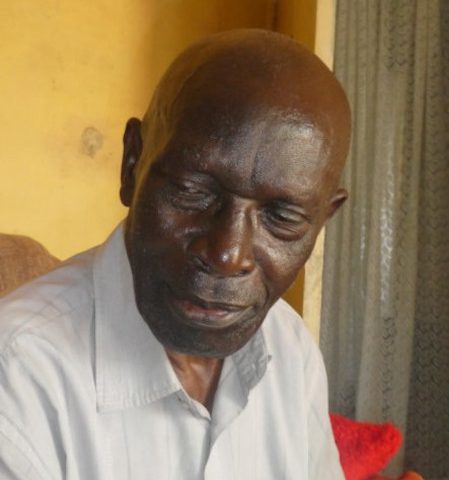
The photograph is of Zambian icon, the late great John (Ginger) Pensulo. He scored the goal which began the integration of Zambian football.