For Shame (Part Two)

For Shame (Part One)
December 19, 2025
The Betrayal of AFCON (Part One)
December 24, 2025For Shame (Part Two)
By Satish Sekar © Satish Sekar (December 18th 2025)
Egyptian Football – the African Pioneer
Egypt was the first African nation to take part in the Olympic Games’ Football Tournament in 1920’s Olympiad in Antwerp, Belgium. This is important because FIFA ran the football tournament for the International Olympic Committee (IOC) from 1908-1928 inclusive. The Olympiads that took place after the First World War were more inclusive of parts of the world that had been ignored previously.
Consequently, arguably from 1920, but definitely from 1924 those tournaments served as unofficial World Cups for football as there was no official tournament (World Cup or championship for nations) in football at that time – there was no need until a decade after the first post-Great War Olympic Games. The format of the tournament and exclusion of many nations – ones defeated in World War – damages 1920’s Olympiad’s claim to be an unofficial World Cup. Both Egypt and Greece did not have an established Football Federation in 1920. Egypt’s was established a year later.
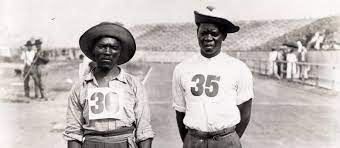
Despite being a member of both FIFA and the IOC since 1910 racist South Africa[1] never took part in the Olympics’ Football Tournaments and before that it should have won a gold medal for racism if that had been an Olympic Event. Its treatment of black Boer War veterans Jan Mashiane and Len Taunyane (Tau) in St Louis’ Olympiad of 1904 which had been wrested away from intended hosts Chicago, was appalling on so many levels (see The Final Rehearsal Part Three – The Racist Games at https://empowersmag.com/empowersmagwp/2021/01/21/the-final-rehearsal-part-three-the-racist-games/ for further details.
Quality of Football
The first post Great War Olympiad took place in Belgium in 1920. Germany and other vanquished nations in World War I were banned from taking part. Egypt made its Olympics Football bow. They were the only African country to do so. The 1920s was a very important decade for Egyptian and African football.
In 1920 Egypt played Italy first – they also played a friendly against Yugoslavia – the only first round losers to play an unscheduled match (see For Shame Part One at https://empowersmag.com/empowersmagwp/2025/12/19/for-shame-part-one/ for further details of that and Egypt’s performance on dćbut at the Olympic Games’ football tournaments).
In 1922 Egypt won independence through the Universal Declaration of Independence which was recognised by Britain, but fell short of full autonomy from the British Empire. Its football, led by the African Club of the Century, Al-Ahly boycotted the inaugural Egyptian League, the Cairo League, then called the Cairo Zone Competition in its first season, 1922-23 in protest at the participation of the English in it. It was won by El-Mokhtalat, who won it seven times before the end of World War Two. Al-Ahly won it for the first time 1924-25 – they went on to win it 11 times in that same period.
Egypt’s domestic football was becoming organised, but it remained to be seen whether it was ready to shine at the Olympic Games.
[1] Apartheid became law in 1948 although scandalously racist laws had deprived its indigenous population and non-white immigrants of their rights long before that. The infamous pass laws had its origins in enslavement laws imposed by the British in the Cape in 1709 to help control their ability to escape. The use of indentured labourers first occurred in the 17th Century as a result of a genocide of indigenous population in modern-day Indonesia. The infamous Johan van Riebeck played a pivotal role in the forced immigration to South Africa’s Cape of the few survivors of that genocide (see The Spice Wars Part Seven – The Hawk at https://fittedin.org/fittedinwp/2022/01/03/the-spice-wars-part-seven-the-hawk/, Land, Labour and Supremacy in South Africa at https://fittedin.org/fittedinwp/2021/12/21/land-labour-supremacy-in-south-africa/and Land and Other Questions Part Two at https://fittedin.org/fittedinwp/2021/12/22/land-and-other-questions-part-two/ for details of that genocide).